
MLS Laser Therapy
Accelerating Tissue Repair at the Cellular Level
MLS Laser Therapy in Marble Falls for acute injuries and persistent inflammatory conditions
Injured tissue heals slowly when circulation remains poor and inflammatory byproducts accumulate faster than your body can clear them. MLS Laser Therapy uses specific wavelengths of light that penetrate several centimeters below skin surface to reach damaged muscle, tendon, and nerve tissue. Bolton Chiropractic Wellness applies this technology to stimulate mitochondrial activity in cells, which increases ATP production and accelerates the chemical reactions required for tissue repair. The laser delivers energy without generating heat that damages tissue, making it safe for areas too sensitive for manual treatment or electrical stimulation.
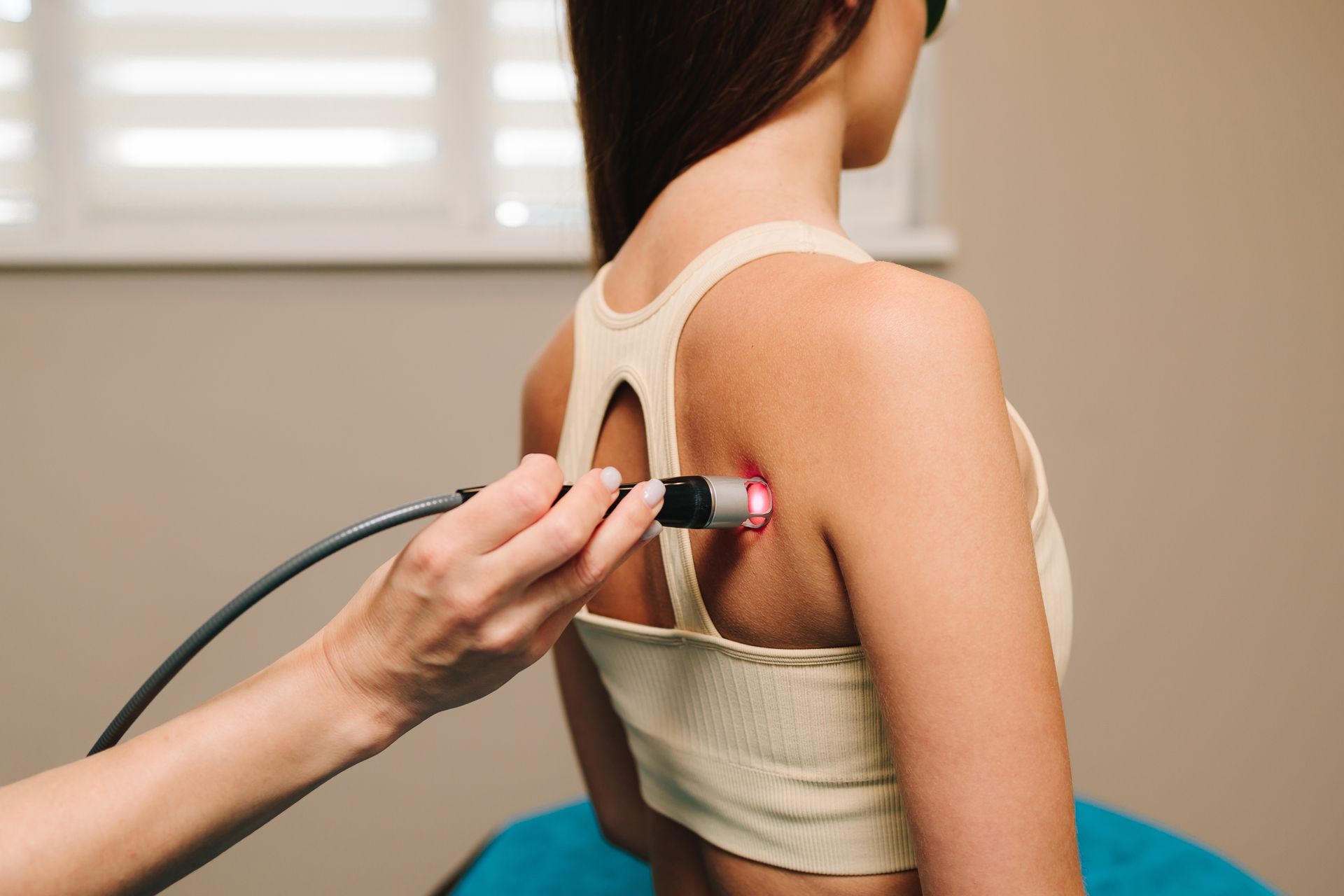
During treatment, the laser handpiece moves slowly across the affected area while delivering synchronized pulses of two wavelengths that work together to reduce pain and promote healing. You feel warmth without discomfort as photons penetrate tissue and trigger increased metabolic activity in damaged cells. Sessions last eight to fifteen minutes depending on treatment area size, and the non-invasive nature means you can receive therapy even when the injury remains too painful for direct pressure.
Request an evaluation to identify whether your injury pattern shows the inflammation and delayed healing that laser therapy addresses.
The Difference Between Surface Healing and Deep Tissue Repair
MLS technology combines continuous and pulsed laser emissions at 808nm and 905nm wavelengths, which affect different tissue depths and cellular processes simultaneously. The continuous wave reduces inflammation and improves circulation, while the pulsed wave targets pain receptors and nerve tissue. This dual-wavelength approach produces faster results than single-wavelength systems because it addresses multiple healing barriers at once rather than requiring separate treatments for pain control and tissue repair.
Once you complete several sessions, swelling that persisted despite rest and ice will visibly decrease as lymphatic drainage improves and inflammatory chemicals clear from the tissue. Sharp pain that prevented you from using the injured area transitions to manageable soreness, allowing you to begin controlled movement that further supports recovery. Range of motion increases because pain no longer triggers protective muscle guarding, and the tissue itself regains elasticity as collagen fibers align properly during the accelerated healing phase. The therapy may help minimize scar tissue formation because organized healing produces more functional tissue than uncontrolled inflammation.
Treatment frequency depends on whether your condition is acute or chronic. Recent injuries respond quickly with daily sessions for the first week, while chronic inflammation requires twice-weekly treatments over several weeks to break the cycle of recurring flare-ups. The therapy supports faster recovery from injuries, which matters for patients who cannot afford extended time away from physical work or athletic activities common in the Marble Falls area.
Answers to Frequent Service Questions
Understanding how laser therapy works helps clarify whether it fits your injury type and recovery timeline.
What does MLS stand for and why does it matter?
MLS refers to Multi-wave Locked System, which synchronizes two wavelengths to produce effects neither wavelength achieves alone, resulting in deeper penetration and faster clinical results than sequential application of the same wavelengths.
How soon after injury can I start laser therapy?
Treatment can begin immediately for most acute injuries because the laser reduces inflammation and pain without requiring direct tissue manipulation that could worsen damage.
Why doesn't the laser burn skin if it's generating cellular energy?
The synchronized pulse pattern delivers energy in controlled bursts that allow heat to dissipate between pulses, preventing tissue temperature from rising to damaging levels while still triggering photochemical reactions.
What injuries respond best to this treatment approach?
Conditions involving soft tissue damage with persistent inflammation see the strongest response, including tendinitis, muscle strains, ligament sprains, nerve irritation, and post-surgical healing complications.
How many treatments will my condition require?
Acute injuries typically improve within six to ten sessions, while chronic conditions that developed over months may need fifteen to twenty treatments to achieve lasting changes in tissue quality and pain levels.
Bolton Chiropractic Wellness adjusts laser settings based on tissue depth, injury severity, and your tolerance during treatment. Book an initial session to determine whether your specific injury shows the inflammatory markers that respond to photobiomodulation therapy.